Student Advocate Perspectives – More Than a Budget Cut: The Real Cost to UW Students
Caid Campbell, Class of 2026, Political Science
The UW has long been a state-supported pathway toward one’s dream fulfillment, economic security, and knowledge contribution to a broader collective. That pathway is currently being threatened due to a 1.5% cut enacted by the WA state legislature in 2025; a deficit set to be further aggravated by the proposal included in the Governor’s budget to cut another 3% of UW’s funding in 2026.
Negative impacts from 2025’s cut were immediately felt by the university and its students. With over 300 faculty and staff members being laid off, the teaching and administrative resources that support students have become collateral damage in efforts to cut costs. Even prior to these cuts, UW faculty were earning wages nearly 30% lower than faculty at other Association of American Universities with cost of living considered. This disparity will only worsen upon enactment of additional cuts. And if UW employees continue to be laid off or forced to leave and find higher paying jobs, the university’s wealth of knowledge and guidance to offer students will rapidly decrease.
In addition to losing faculty mentorship and expertise, some UW students may also lose critical financial aid. First-year student Shams Muhi tells me her exhilaration of enrolling at the UW turned to disappointment upon receiving her financial aid package. “There were some complications with the aid I received. It was not nearly enough and the amount was not something me or my family could come up with in such short notice.” Shams describes the emotional turmoil this put her family through. “My father cried because no matter how hard he works he could not afford to help me… even with the many hours of overtime and holidays he worked.”
Reduced state funding then makes paying for undergraduate education an immensely distressing process. But just as pivotally, it drains the money students need to afford graduate school. This makes access to the career opportunities and capital that flow from graduate school largely contingent on socioeconomic status rather than individual drive and merit. Such inaccessibility ultimately erodes education as a pathway to obtaining economic security. And further, it sacrifices the commendable dreams of UW students like Shams, who hopes to attend law school to “contribute to the betterment of society” through legal advocacy.
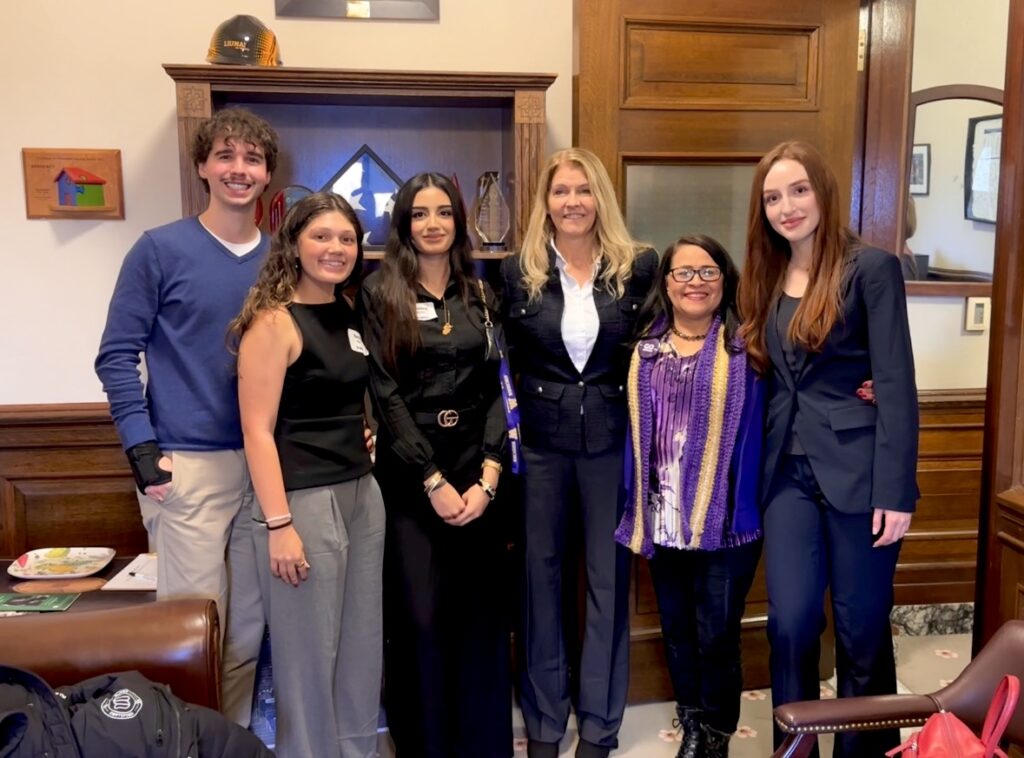
But in light of these financial obstacles, UW students continue to be resilient. Shams for one is embodying the UW’s core value of integrity through advocating for higher education accessibility as a Student Advocate with UWImpact, the legislative advocacy sector of the UW Alumni Association. “I joined UWImpact to help advocate for future students at UW so their experiences could be less stressful than mine,” she says. As a Student Advocate myself, UWImpact is actually how I met Shams! This serves as an important reminder to the state legislature that access to higher education does more than fulfill individual dreams; it creates lifelong connections with a diverse community.
Ultimately, Washington state disinvesting in higher education puts unwarranted strain on high-achieving students and faculty who are pillars for positive global and local change. So, what can we do to put an end to this regressive trend set to continue with more proposed cuts in the 2026 session? We can start by contacting state legislators to urge their support for UW’s funding. And we can continue by bringing awareness to the matter; people cannot convince the state to reinvest in the UW if they are unaware our funds were cut in the first place. We as UW students, faculty, and alumni are trailblazers. If we utilize our knowledge and grit, I have no doubt that our collective voice can ignite widespread advocacy and prompt lasting change.